Artists
South Korea
Young Jin Kim
Lumen Prints
06.04.26 30.04.26
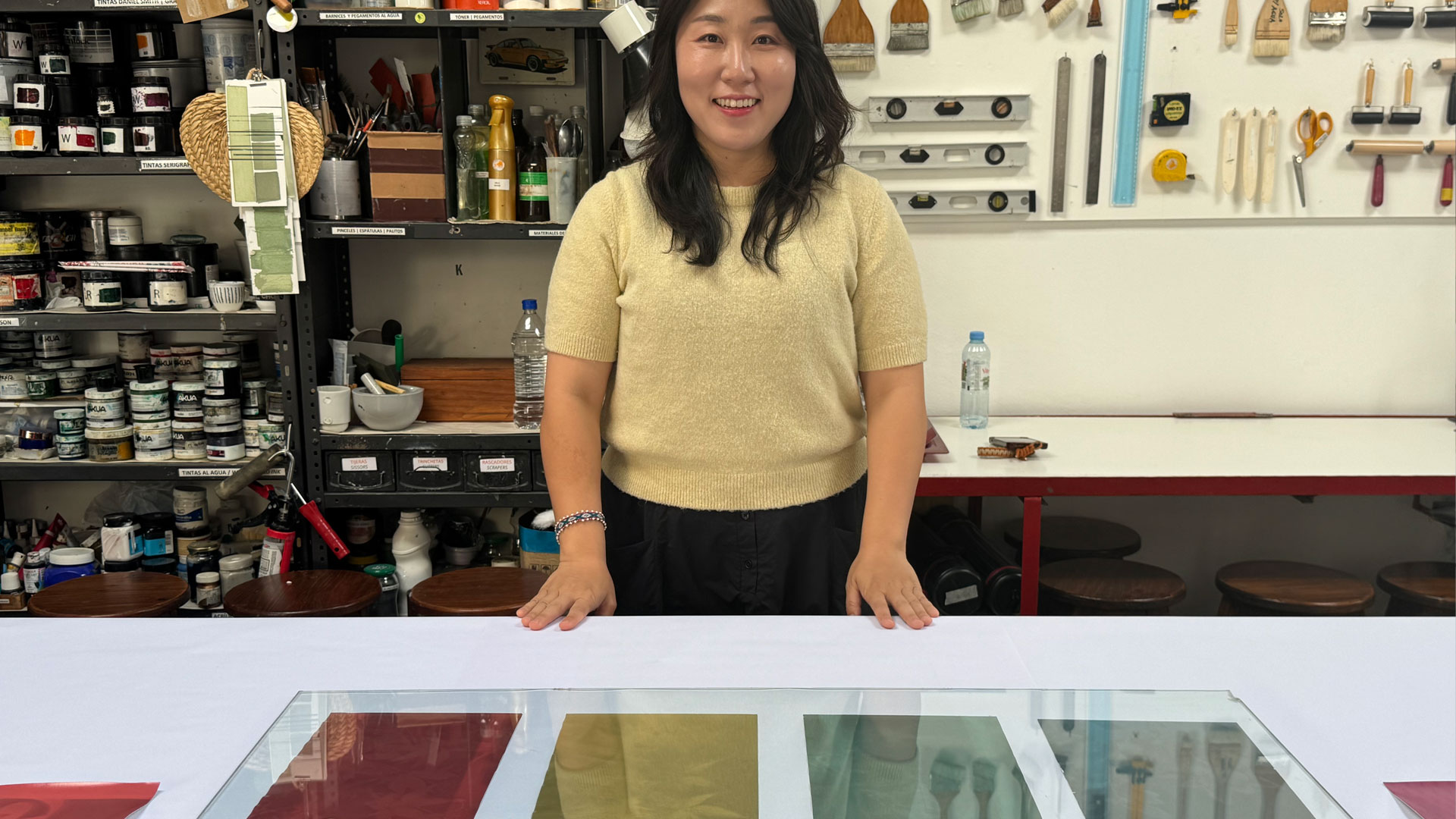
Youngjin Kim studied Fine Arts at the École des Beaux-Arts de Nantes, France.
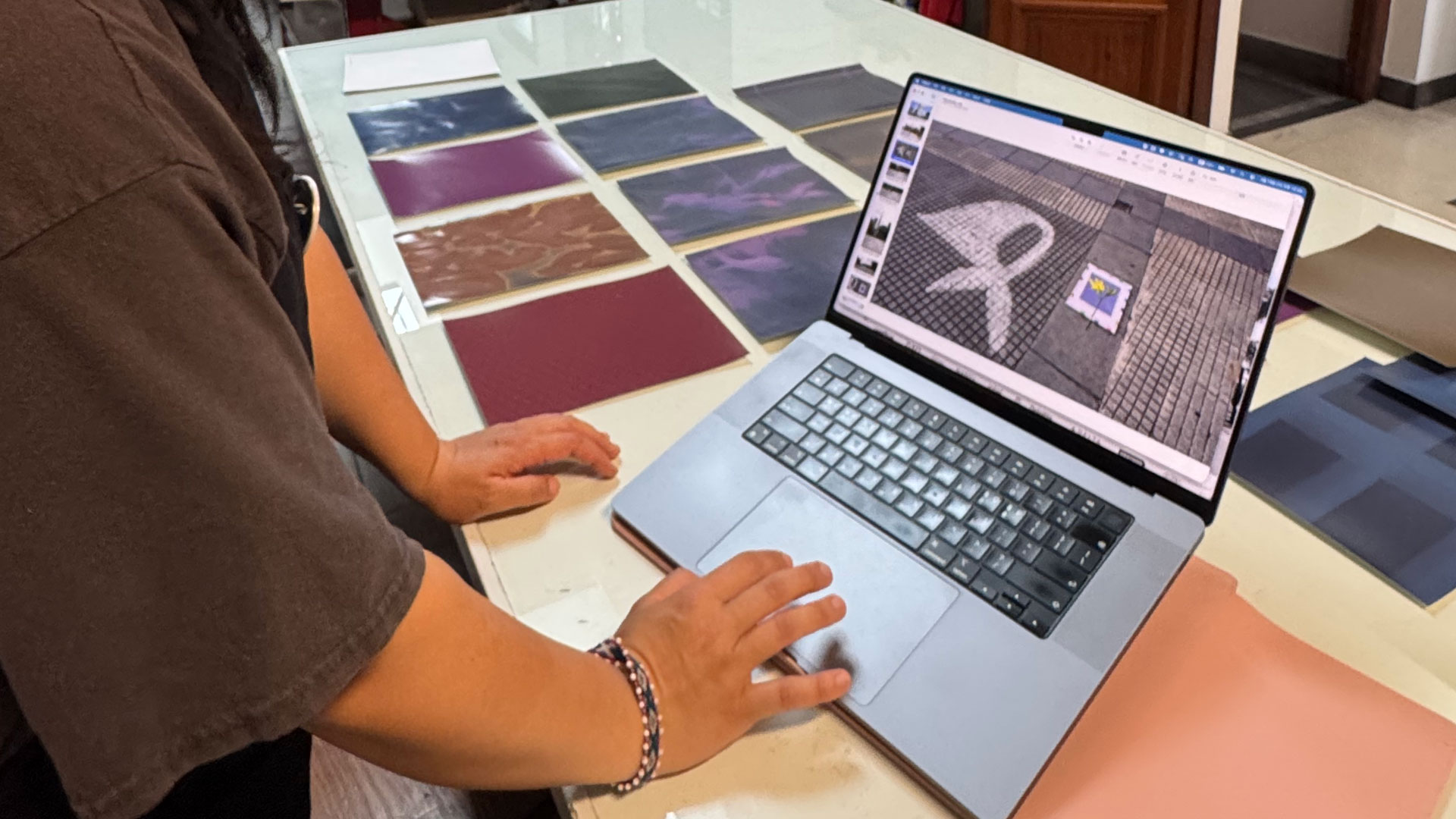
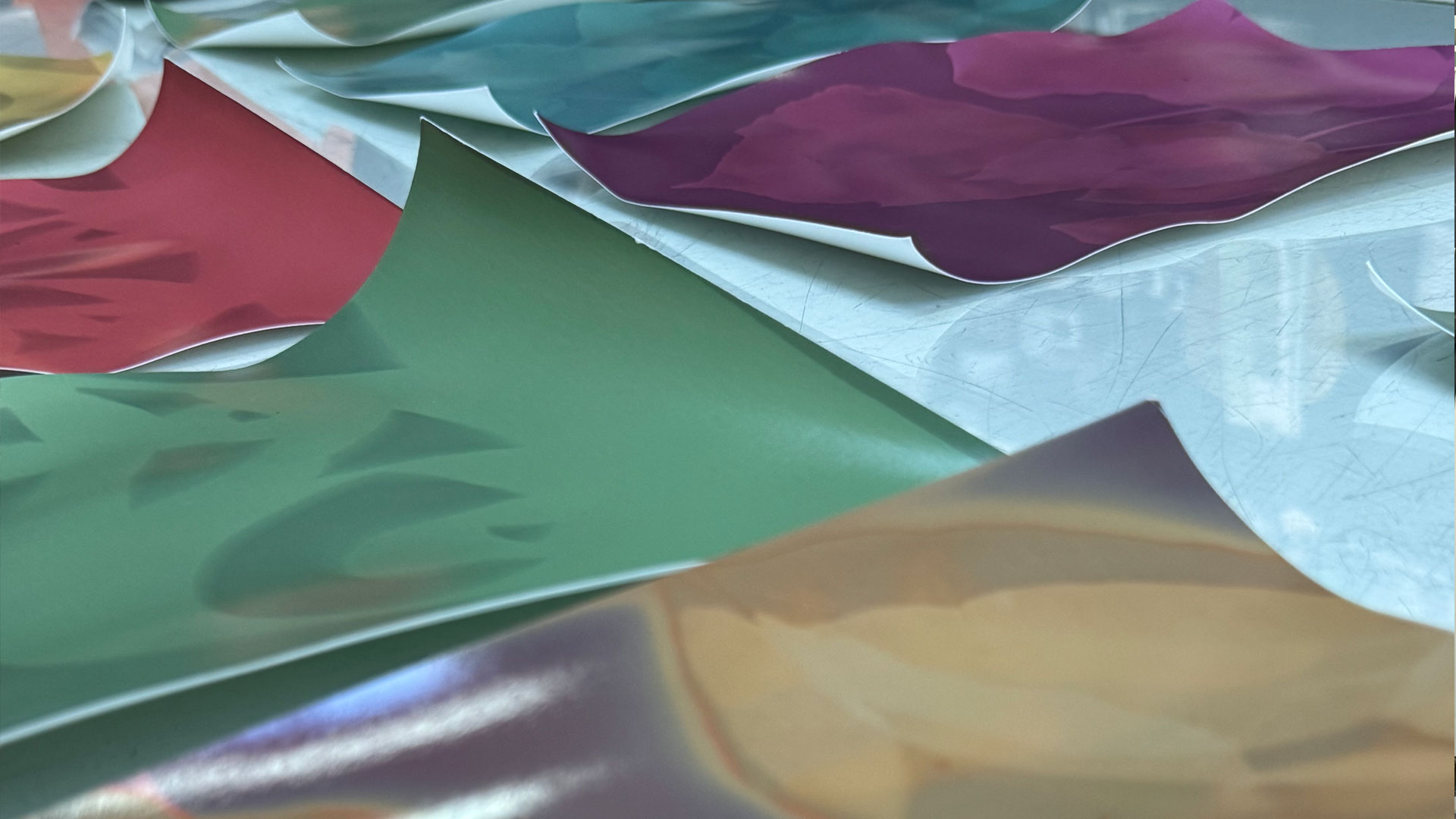
She works with the photogram — a camera-less photographic technique in which light and objects interact directly on light-sensitive surfaces — to explore the boundary between presence and absence, memory and forgetting. Drawing on the epiphanic qualities of light, Kim renders invisible emotions and recollections into visible form, attending closely to the interplay of chance and inevitability that emerges through the process.
Through an artistic practice that bridges social events and personal experience, Kim builds an image-world where traces and disappearance coexist.
ARTIST STATEMENT
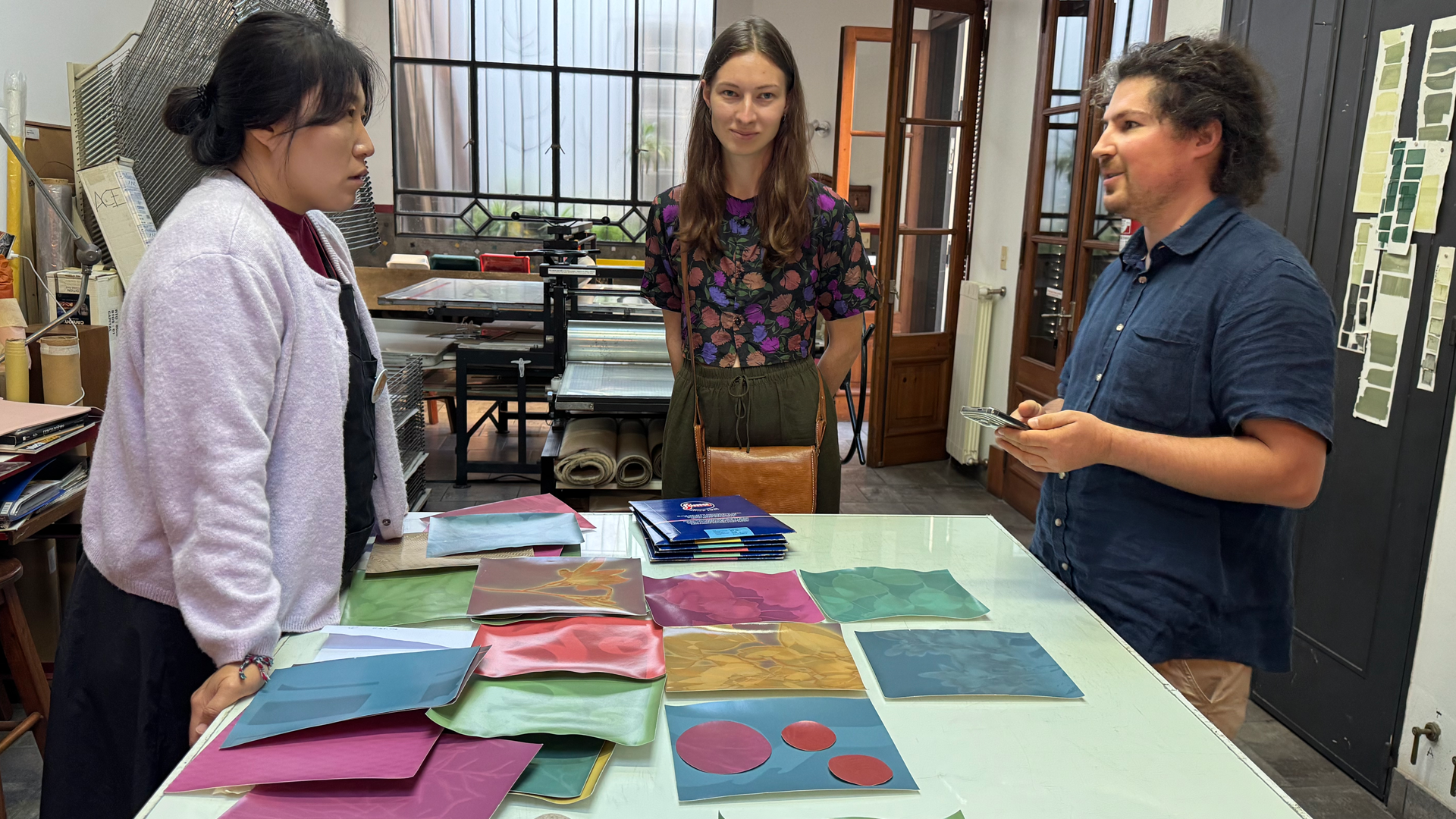
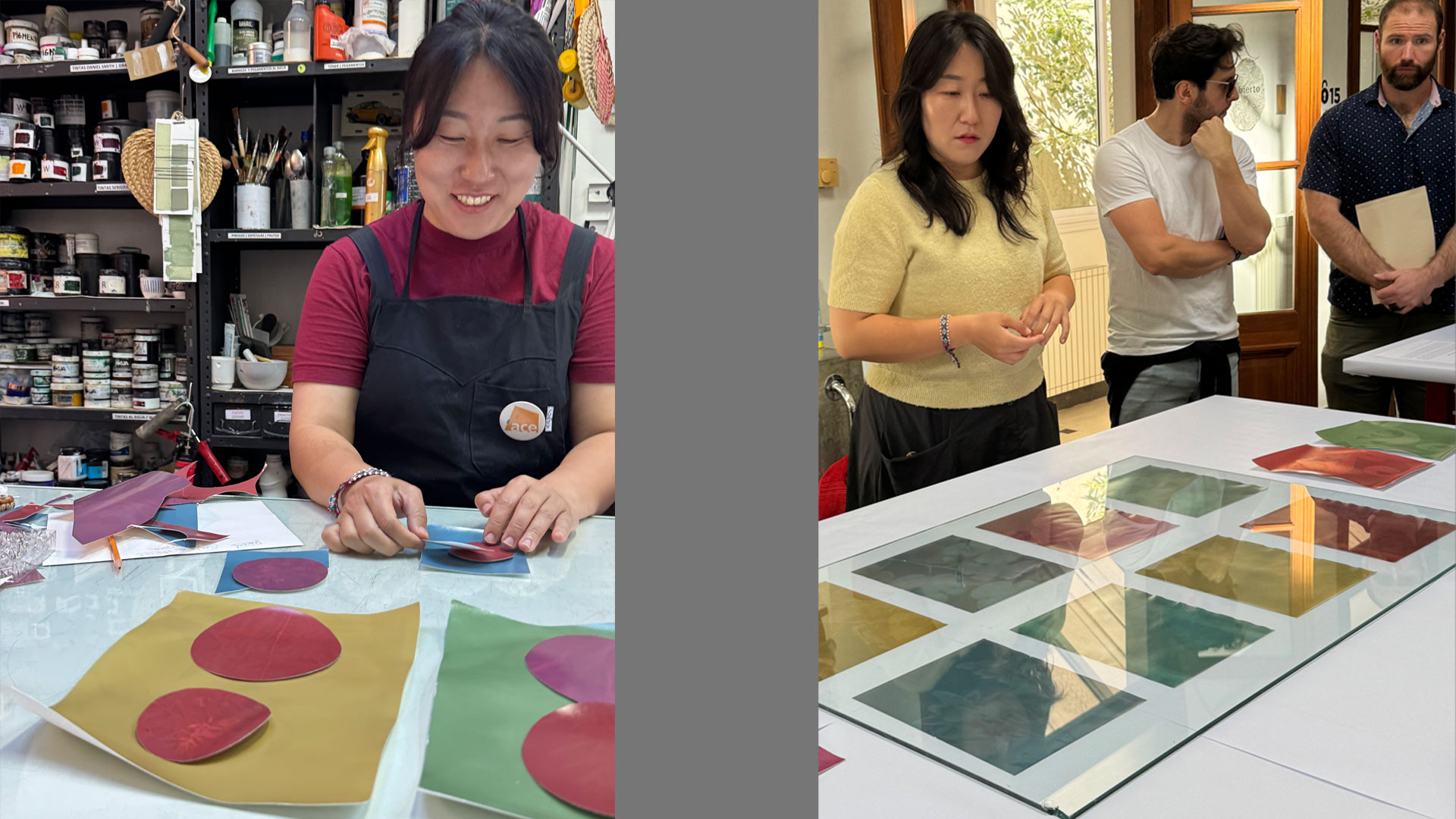
On the other side of the world, the light of Buenos Aires, Argentina arrives at a different angle and temperature than that of the northern hemisphere.Solar Record is an intimate trace of dialogue made without the mediation of a lens — sunlight passing directly through plants and fragments of the city onto photosensitive paper.
Collected in places where life and death, history and present converge — Plaza de Mayo, Recoleta Cemetery, and the parks of Palermo — these images move beyond photographic representation toward something more performative: treating light as a language through which perception, existence, and the experience of the everyday are made visible.
The colors and forms embedded in the photographic paper are a palimpsest — layers of the sun's altitude and the passage of time pressed into one another. As explored in the previous work Palimpsest of Today (매일의 오늘), the present is always today shaped by the accumulation of every yesterday.
Beneath the unfamiliar light of Buenos Aires, ephemeral and transient things are transformed, in the moment they are placed under the sun, into physical matter that holds its trace. Things that disappear, a language of existence inscribed within absence — the lumen print is the place where disappearance and what remains coexist.
BIO
Youngjin Kim
Born 1986, Daejeon, South Korea. Lives and works in Daejeon, South Korea.
EDUCATION
2017 | Diplôme National Supérieur d’Expression Plastique,École des Beaux-Arts de Nantes, France
2014 |Diplôme National d’Arts Plastiques, École des Beaux-Arts de Nantes ,France
2009 | B.F.A. in Art Education — Mokwon University — South Korea
EXHIBITIONS
2025 |The Palimpsest of Today, GS Caltex Yeulmaru Jangdo Art Museum, South Korea
2024 | Public Art New Hero (group),K&L Museum, South Korea
2023 | Animated Still Life, Lee Ungno Museum M2, South Korea
2022 | What You Want in Life, Artist Residency TEMI, South Korea
2021 | NEXTCODE 2021 (group), Daejeon Museum of Art, South Korea.
RESIDENCIES
2025 | GS Caltex Yeulmaru Creative Studio Residency, Yeosu, South Korea
2022 | Artist Residency TEMI, Daejeon, South Korea
2018 | Paris Lee Ungno Residency ,Vaux-sur-Seine, France
AWARDS
2024 |Public Art New Hero, Public Art Magazine, Seoul, South Korea
OTHERS
2024–25 |Next Generation ArtiStar, Selected Art, Daejeon Culture and Arts Foundation ,South Korea
2021 | Art Creation Support Grant , Daejeon Culture and Arts Foundation, South Korea
Related Activities
Open Studio
Latitudes
Artists in dialogue
29.04.26
The three artists brought together in this Open Studio approach, through very different perspectives and languages, the experience of inhabiting a world shaped by displacement, overlapping territories, and transformation. Their works challenge the idea of both territory and the body as stable, bounded spaces, proposing instead forms of belonging that are shaped through time, memory, and experience. In this sense, neither place nor the body appears simply as a context or container in which things happen, but rather as something produced and transformed through the relationships we establish with them.
This perspective also invites us to reconsider the notion of origin. Rather than understanding it as a fixed point to which one can return, the three practices present it as a shifting condition—one that persists even as it changes. The past does not function here as a fixed image, but as an active material that continues to intervene in the present. From different cultural and geographical experiences, the artists explore forms of identity and belonging that do not depend on stable borders, but on the capacity to establish relationships across times, spaces, and experiences.
Latitudes proposes thinking about this relational space: not so much where we are, but from where—and through which layers of experience—we construct a place.


